
Global Seafood Market Outlook – July 2026
Updated: 2 days ago
Market Intelligence by Kata Seafoods
Executive Summary
The global seafood industry entered the second half of 2026 with renewed confidence after navigating several years of extraordinary disruption. While the pandemic-era challenges of logistics, labour shortages, inflation, and volatile consumer demand have largely subsided, the market has entered a new phase defined by changing trade patterns, shifting consumer preferences, sustainability expectations, and increased competition for premium seafood products.
For buyers, processors, distributors, and retailers, the most important question is no longer whether seafood will be available
but where it will come from, at what price, and under what market conditions. Across nearly every major seafood category, purchasing decisions are becoming increasingly strategic. Companies are placing greater emphasis on supply chain reliability, long-term supplier relationships, product quality, traceability, and inventory management rather than simply securing the lowest available price.
Canada continues to occupy a pivotal role within the global seafood industry. As the world's largest producer of Atlantic snow crab and one of the leading exporters of cold-water lobster, Canadian processors remain critical suppliers to North American, European, and Asian markets. The country's reputation for responsible fisheries management, strict food safety standards, and premium-quality products continues to provide a significant competitive advantage in international trade.

The 2026 Canadian snow crab season illustrates the resilience of the industry. Weather delays, heavy ice conditions, and slower-than-normal harvesting created concerns during the opening weeks of the fishery. Buyers questioned whether inventories would be sufficient for the important spring retail season. However, as harvesting accelerated, processors rapidly increased production and exports, restoring confidence throughout the market. By early summer, Canadian exporters had successfully replenished inventories and demonstrated once again the flexibility and efficiency of the country's seafood supply chain.
Outside Canada, several important developments continue shaping global seafood markets.
Russia remains one of the world's largest producers of king crab and snow crab, increasingly directing premium live products into Asian markets where returns significantly exceed those available through frozen exports. China has strengthened its position as the dominant destination for live crab, creating a growing separation between live and frozen pricing structures. This trend is influencing purchasing strategies throughout Japan, South Korea, Europe, and North America.
Norway continues to experience tighter king crab supplies due to lower quotas while maintaining a respected position within premium snow crab markets. Alaska's gradual biological recovery has improved confidence in long-term sustainability, although harvest volumes remain modest compared with Canada's Atlantic fishery.
Meanwhile, demand patterns continue evolving worldwide. Consumers increasingly seek premium wild-caught seafood that offers exceptional quality, sustainability, and traceability. Restaurants are expanding seafood offerings to meet growing consumer interest in healthy protein options, while retailers continue investing in premium frozen seafood programs that provide convenience without sacrificing quality.
Technology is also reshaping the seafood industry. Automation within processing plants, digital traceability systems, real-time logistics monitoring, and artificial intelligence are improving operational efficiency while enhancing food safety and inventory management. Buyers increasingly expect detailed product information, sustainability documentation, and transparent sourcing practices as standard components of commercial relationships.
Freight markets have stabilized considerably compared with previous years, although transportation costs remain elevated relative to historical averages. Ocean freight availability has improved, yet geopolitical tensions, port congestion, and regional shipping disruptions continue requiring careful logistics planning. Currency fluctuations remain another important consideration, influencing export competitiveness and purchasing power across multiple international markets.
Throughout the remainder of 2026, seafood markets are expected to remain relatively balanced. Supply across most major fisheries appears adequate to satisfy projected demand, although seasonal fluctuations, weather events, and regional harvest performance will continue influencing short-term pricing. Companies maintaining flexible purchasing strategies and diversified supplier networks are expected to remain best positioned to capitalize on changing market conditions.
At Kata Seafoods, we believe market intelligence is just as valuable as product quality. Our objective is not only to supply premium Canadian seafood but also to help customers understand the forces influencing pricing, availability, and long-term market trends. By combining industry knowledge with dependable sourcing and exceptional customer service, we strive to become a trusted partner for seafood buyers around the world.
This report examines the principal developments shaping global seafood markets during the second half of 2026, providing practical insights for importers, distributors, wholesalers, processors, retailers, and foodservice operators. From Atlantic Canada's snow crab fisheries to emerging opportunities across Asia and Europe, understanding these trends will help buyers make informed purchasing decisions in an increasingly competitive global marketplace.
Global Seafood Industry at a Glance
Several key themes have emerged during 2026 that are reshaping international seafood trade.
1. Supply Chains Have Become More Resilient
Following years of disruption caused by the COVID-19 pandemic and global shipping challenges, seafood supply chains have become considerably more stable. Processing facilities have largely returned to normal production schedules, shipping capacity has improved, and buyers have adapted inventory strategies to reduce exposure to unexpected disruptions.
Rather than maintaining excessive inventories, many importers are now purchasing more frequently and in smaller volumes, allowing them to respond more quickly to changing market conditions while reducing carrying costs.
2. Premium Seafood Continues to Outperform
Consumers continue demonstrating a willingness to pay higher prices for seafood products that offer superior quality, sustainability certifications, and reliable traceability. Premium Canadian snow crab, cold-water lobster, dry-packed sea scallops, and Greenland turbot remain highly sought after across retail and foodservice markets.
Restaurants increasingly emphasize premium seafood offerings that differentiate menus while supporting higher average customer spending. Retailers likewise continue expanding premium frozen seafood selections as consumers prepare restaurant-quality meals at home.
3. Sustainability Influences Purchasing Decisions
Environmental stewardship has become a commercial advantage rather than simply a regulatory requirement.
Major retailers, institutional buyers, and international distributors increasingly evaluate suppliers based on responsible harvesting practices, fishery management, certification programs, carbon reduction initiatives, and product traceability.
Canadian fisheries continue benefiting from internationally respected management systems that support long-term resource sustainability while providing buyers with confidence in product origin and regulatory compliance.
4. Asia Continues Driving Premium Seafood Demand
China remains one of the fastest-growing destinations for premium seafood products, particularly live shellfish and high-end restaurant offerings. Japan continues representing one of the world's most sophisticated seafood markets despite currency-related purchasing challenges, while South Korea continues strengthening its position as both a consumer market and regional distribution hub.
The growing importance of Asian markets is encouraging exporters worldwide to diversify beyond traditional North American customers while investing in logistics capable of supporting premium live and chilled seafood distribution.
5. Value-Added Processing Creates Competitive Advantage
Processors are increasingly differentiating themselves through innovation rather than commodity pricing alone.
Products such as individually quick frozen (IQF) seafood, retail-ready packaging, portion-controlled fillets, vacuum-sealed premium cuts, and customized foodservice specifications continue generating stronger margins than conventional bulk products.
Automation and modern processing technologies are allowing seafood companies to improve consistency, reduce waste, and increase labour productivity while maintaining the premium quality expected by international buyers.
Canada: Atlantic Snow Crab Market
A Resilient Industry Continues to Lead Global Supply
Canada remains the world's largest producer and exporter of Atlantic snow crab, supplying premium wild-caught crab to customers throughout the United States, Europe, Asia, and emerging international markets. While every fishing season presents unique biological, environmental, and commercial challenges, the Canadian industry has once again demonstrated why it is regarded as one of the most dependable seafood sectors in the world.
The 2026 season began under difficult circumstances. Heavy ice conditions, adverse weather, and delayed fishing activity across several Atlantic regions slowed early production and created uncertainty among buyers. Importers, distributors, and retailers questioned whether sufficient inventory would be available to support spring promotions and foodservice demand. For several weeks, market sentiment leaned toward concerns over tight supply and potential price increases.
As the season progressed, however, Canadian harvesters and processors responded with remarkable efficiency. Improved weather conditions accelerated harvesting, processing plants increased production capacity, and exports quickly recovered. By early summer, much of the uncertainty that characterized the opening weeks had subsided, reinforcing Canada's reputation for reliability even during challenging operating conditions.
For international buyers, this recovery highlighted one of Canada's greatest strengths: an integrated seafood supply chain capable of adapting quickly to changing conditions while maintaining consistent product quality and food safety standards.
Canada's Position in the Global Snow Crab Industry
Atlantic Canada accounts for the overwhelming majority of global snow crab exports. Harvests from the Gulf of St. Lawrence, Newfoundland and Labrador, Nova Scotia, and portions of Quebec collectively supply hundreds of millions of pounds of premium wild-caught snow crab annually.

Canadian snow crab is recognized internationally for several competitive advantages:
Wild-caught from cold North Atlantic waters.
Strict federal fisheries management.
Modern HACCP-certified processing facilities.
High food safety standards.
Strong traceability throughout the supply chain.
Excellent meat yield and presentation.
Reliable freezing technology preserving freshness.
Long-standing reputation among seafood buyers.
These attributes continue to support strong demand from wholesalers, retailers, foodservice distributors, and seafood processors worldwide.
Unlike many competing fisheries, Canada's management approach emphasizes long-term sustainability over short-term production increases. Annual quota decisions are based on scientific stock assessments designed to protect future harvest opportunities while ensuring the long-term health of the resource.
For buyers, this provides confidence that Canadian snow crab will remain a dependable source of premium product for years to come.
Regional Production
Although commonly referred to simply as "Canadian snow crab," production varies significantly across Atlantic Canada.
Newfoundland and Labrador
Newfoundland and Labrador remains Canada's largest producing region by volume. The province benefits from extensive fishing grounds, experienced harvesting fleets, and a large network of processing facilities.
Production from Newfoundland supplies both domestic buyers and export markets, with the United States remaining the largest destination.
Fishing activity often extends later into the summer than other regions, providing valuable continuity of supply after Gulf fisheries have completed their seasons.
This staggered harvesting schedule helps Canadian exporters maintain product availability throughout the peak buying period while reducing pressure on processors.
Gulf of St. Lawrence
The Gulf fishery continues producing some of the highest-quality snow crab available internationally.
Processors operating throughout New Brunswick, Prince Edward Island, Quebec, and Nova Scotia have built decades of expertise handling premium crab destined for demanding international markets.
Because harvesting generally begins earlier than Newfoundland, Gulf production plays an important role supplying spring retail promotions throughout North America.
Premium section quality from Gulf production continues attracting buyers seeking excellent appearance, high meat yield, and consistent sizing.
Nova Scotia
Although representing a smaller share of overall production, Nova Scotia remains strategically important because of its proximity to major export infrastructure.
The province supports several modern processing facilities serving customers throughout North America, Europe, and Asia.
Its ports provide efficient access to international container shipping while allowing rapid delivery into major U.S. distribution centres.
Harvest Performance During 2026
The beginning of the 2026 season presented numerous operational challenges.
Heavy ice delayed vessel departures across several regions while poor weather reduced available fishing days. Initial landings remained well below expectations, leading many buyers to anticipate tighter inventories and higher prices.
Some retailers postponed promotional activity while distributors adopted cautious purchasing strategies until production became more predictable.
Fortunately, these concerns proved temporary.
Once weather conditions improved, harvesting accelerated rapidly. Canadian fishing fleets increased daily landings, processors expanded production schedules, and inventory levels improved steadily throughout late spring.
This rapid recovery demonstrated both the experience of Atlantic Canadian harvesters and the flexibility of modern processing facilities capable of managing large fluctuations in daily landings.
Rather than experiencing prolonged shortages, most buyers ultimately received sufficient product to support planned sales programs.
Processing Capacity
Canada possesses one of the world's most advanced snow crab processing industries.
Modern facilities employ thousands of seasonal workers while utilizing sophisticated freezing technology, automated grading systems, and strict quality assurance procedures.
Processing operations typically include:
Cooking
Chilling
Brine freezing
Individual grading
Size sorting
Packaging
Metal detection
Cold storage
Export preparation
Many facilities have invested significantly in automation to improve productivity while maintaining consistent product quality.
Although labour availability continues presenting challenges throughout Atlantic Canada, ongoing investment in equipment has helped processors improve efficiency without compromising quality.
These improvements allow Canadian suppliers to compete effectively against lower-cost international producers.
Product Specifications
Canadian processors continue supplying a wide range of product specifications designed to meet diverse customer requirements.
Common export products include:
Snow Crab Clusters

The industry's flagship product.
Typically available in several size categories including:
3–5 oz
5–8 oz
8–10 oz
10–12 oz
12 oz and larger
Clusters remain the preferred format for retail seafood departments, restaurants, wholesalers, and seafood distributors because they offer excellent presentation while minimizing preparation time.
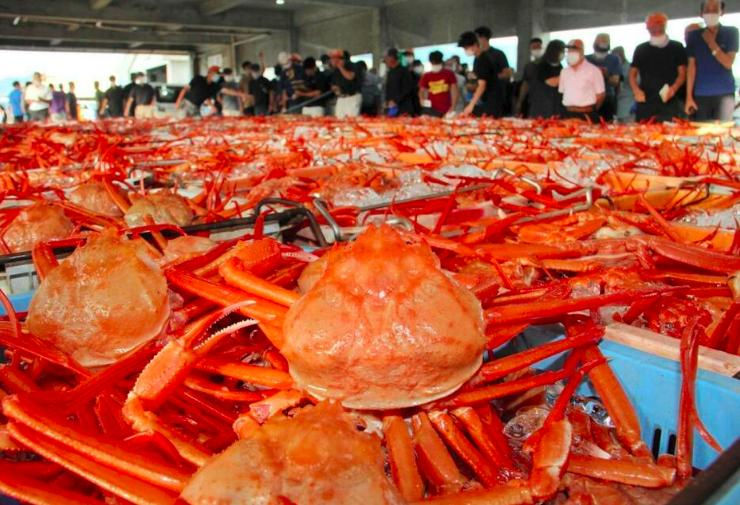
Whole Cooked Crab
Certain markets continue preferring whole cooked snow crab, particularly in Asia and among specialty retailers.
Whole crab maintains strong demand where consumers value traditional preparation methods and premium visual presentation.
Meat Products

Value-added processing continues expanding.
Leg meat, combination meat, cocktail claws, and specialty retail formats allow processors to maximize utilization while providing convenient options for foodservice operators and manufacturers.
Demand for ready-to-use crab meat continues growing as restaurants seek labour-saving ingredients without sacrificing quality.
Export Markets
The United States remains Canada's largest export destination for snow crab.
Strong consumer awareness, established distribution networks, and consistent demand from both retail and foodservice sectors continue supporting substantial import volumes each year.
Major U.S. destinations include:
New England
Mid-Atlantic states
Midwest distribution centres
Gulf Coast seafood markets
West Coast importers
Beyond the United States, Canadian exporters continue expanding sales throughout:
Japan
South Korea
China
Taiwan
France
Spain
Denmark
United Kingdom
Diversification reduces dependence on any single market while creating opportunities to maximize returns across different product specifications.
Price Trends
Pricing throughout 2026 has reflected the transition from early uncertainty toward improved supply.
Smaller promotional sections remained comparatively firm due to strong retail demand.
Larger sections experienced greater price flexibility as foodservice buyers increased purchasing activity during the summer restaurant season.

Several factors continue influencing market pricing:
Supply
Harvest timing, quotas, weather, and inventory.
Demand
Restaurant activity, tourism, retail promotions, holidays, and consumer confidence.
Exchange Rates
Canadian dollar versus U.S. dollar continues influencing export competitiveness.
Transportation
Ocean freight, trucking costs, fuel prices, and logistics remain important cost considerations.
Rather than experiencing dramatic volatility, the market has gradually moved toward greater stability as production normalized.
Sustainability Continues Driving Buyer Confidence
Perhaps Canada's greatest competitive advantage remains its commitment to responsible fisheries management.
International buyers increasingly evaluate suppliers based not only on price but also on environmental stewardship and traceability.
Canadian fisheries operate within one of the world's most comprehensive regulatory frameworks.
Government scientists conduct regular stock assessments while annual quota decisions balance economic opportunity with long-term resource sustainability.
Harvesters comply with strict licensing requirements, reporting obligations, and monitoring programs designed to preserve healthy crab populations for future generations.
For retailers and foodservice operators, these practices provide important assurance that Canadian snow crab supports responsible sourcing objectives increasingly demanded by consumers.
What Buyers Should Expect
Looking ahead to the remainder of 2026, buyers should anticipate a generally stable Canadian snow crab market.
Inventories have improved substantially since the opening weeks of the season, processing facilities continue fulfilling export commitments, and harvesting activity has largely met expectations despite the delayed start.
Barring significant weather disruptions or unexpected logistical challenges, Canadian suppliers appear well positioned to support both retail promotions and foodservice demand through the balance of the year.
For importers considering purchases for late summer, autumn, and early holiday programs, maintaining close communication with suppliers will remain essential.
While overall availability has improved, premium grades and larger section sizes may continue experiencing periods of tighter supply depending on regional production and export demand.
United States Market Analysis
Strong Consumer Demand Continues to Support Premium Canadian Seafood
The United States remains the single most important export market for Canadian seafood, representing one of the world's largest consumers of premium snow crab, lobster, scallops, and other cold-water species. Strong purchasing power, sophisticated distribution networks, and widespread consumer recognition of Canadian seafood continue to make the U.S. a cornerstone of the North American seafood industry.
For Canadian exporters, the United States offers more than proximity. It provides access to a mature marketplace where quality, consistency, food safety, and dependable supply often outweigh price alone. While economic uncertainty and inflation have influenced discretionary spending in recent years, seafood consumption has remained remarkably resilient, particularly among consumers seeking healthy, high-protein meal options.
The relationship between Canada's seafood industry and U.S. buyers has been built over decades. Long-standing partnerships between harvesters, processors, distributors, wholesalers, retailers, and foodservice operators have created one of the most integrated seafood supply chains in the world.
As the second half of 2026 unfolds, market attention has shifted away from concerns over product availability and toward inventory management, seasonal demand, promotional activity, and long-term purchasing strategies.
Foodservice Continues Driving Seafood Consumption
The foodservice sector remains one of the largest consumers of premium Canadian seafood.
Restaurants continue expanding seafood offerings as consumers increasingly seek healthier menu options while remaining willing to spend on high-quality dining experiences. Premium snow crab, lobster, sea scallops, and Atlantic groundfish continue appearing on menus ranging from casual seafood restaurants to upscale fine dining establishments.
Regional seafood boils throughout the Gulf Coast, Mid-Atlantic states, and portions of the Midwest continue supporting strong seasonal demand for snow crab clusters. These events have become increasingly popular among both independent restaurants and national chains seeking limited-time menu promotions during peak summer months.
Buffets, casino resorts, cruise operators, and hotel restaurants also continue purchasing significant volumes of premium crab products, particularly larger section sizes that deliver exceptional plate presentation.
Although labour shortages continue affecting portions of the restaurant industry, operators increasingly favour premium seafood products requiring minimal preparation time. Individually quick frozen products, portion-controlled seafood, and consistently graded snow crab clusters help restaurants reduce waste while maintaining predictable food costs.
Retail Markets Continue Evolving
Consumer purchasing habits have changed significantly over the past several years.
Retail seafood departments continue benefiting from increased consumer confidence in preparing seafood at home. Advances in freezing technology, improved packaging, and expanded product information have encouraged shoppers to purchase premium frozen seafood that previously may have been reserved for restaurant dining.
Canadian snow crab remains one of the most recognizable premium seafood products available within North American supermarkets.
Major grocery chains continue promoting frozen snow crab during key seasonal periods including:
Easter
Mother's Day
Memorial Day
Independence Day
Thanksgiving
Christmas
New Year's celebrations
Premium seafood also continues gaining popularity among warehouse clubs, specialty retailers, and online grocery platforms.
Consumers increasingly prioritize convenience without sacrificing quality. This trend supports demand for retail-ready seafood products that require minimal preparation while delivering restaurant-quality results.
Consumer Preferences Continue Changing
Today's seafood consumer differs significantly from a decade ago.
Several long-term trends continue influencing purchasing decisions:
Health and Wellness
Seafood remains strongly associated with healthy eating.
Consumers recognize seafood as an excellent source of protein while appreciating naturally occurring omega-3 fatty acids, vitamins, and minerals.
As awareness of balanced nutrition continues growing, premium seafood remains well positioned within consumer purchasing habits.
Premium Experiences at Home
Many consumers now recreate restaurant-quality meals at home.
Premium Canadian snow crab, lobster, and scallops provide special-occasion dining experiences without requiring restaurant reservations or premium restaurant pricing.
High-quality frozen seafood allows consumers to enjoy consistent results throughout the year.
Sustainability Matters
Responsible sourcing continues influencing purchasing behaviour.
Consumers increasingly look for products harvested under well-managed fisheries with transparent supply chains and strong environmental stewardship.
Canadian seafood benefits significantly from this trend because of its reputation for responsible fisheries management and internationally respected regulatory oversight.
Import Trends
The United States imports seafood from dozens of producing nations.
Canada remains among the country's most important seafood trading partners because of:
Geographic proximity
Reliable transportation networks
Consistent production
Premium product quality
Shared regulatory standards
Efficient border logistics
The integrated North American transportation system allows Canadian processors to deliver fresh and frozen seafood rapidly throughout the United States.
Truck transportation remains particularly important for deliveries into New England, the Northeast, the Midwest, and portions of the South.
Containerized ocean freight continues supporting larger export programs destined for West Coast distribution centres and overseas re-export markets.
Competition Within the Marketplace
Although Canadian seafood enjoys an excellent reputation, competition continues increasing.
Snow crab competes against:
Norwegian snow crab
Alaska snow crab
Greenland snow crab
Russian product entering non-U.S. markets
Alternative shellfish products
King crab competes with:
Alaska golden king crab
Norwegian red king crab
Southern king crab from South America
Premium lobster offerings

Restaurants and retailers also evaluate seafood alongside competing proteins including beef, poultry, pork, and plant-based alternatives.
Maintaining product quality therefore remains essential.
Canadian processors continue distinguishing themselves through dependable grading, attractive presentation, food safety, and customer service rather than attempting to compete solely on price.
Inventory Management
Following several years of supply chain volatility, distributors have become increasingly disciplined regarding inventory.
Rather than purchasing speculative volumes months in advance, many buyers now maintain balanced inventories while replenishing more frequently.
This strategy reduces financial exposure while allowing companies to respond quickly to changing market conditions.
Modern inventory management software, improved forecasting tools, and better communication between suppliers and customers have contributed significantly to this trend.
For Canadian exporters, maintaining strong customer relationships has become just as important as offering competitive pricing.
Reliable communication allows buyers to confidently plan promotional activity while minimizing inventory risk.
Logistics Continue Improving
Transportation remains one of the most important factors affecting seafood distribution.
Compared with previous years, container availability has improved considerably.
North American trucking capacity has also stabilized, although labour shortages continue affecting certain regions.
Cold chain management remains essential throughout the distribution process.
Canadian exporters continue investing in:
Modern cold storage
Improved packaging
Digital shipment monitoring
Temperature tracking
Inventory visibility
These investments reduce spoilage while improving customer confidence.
Food Safety and Traceability
Regulatory compliance continues becoming more important throughout international seafood trade.
American buyers increasingly expect detailed documentation covering:
Harvest origin
Processing facility
Product specifications
Lot identification
Traceability
Food safety certifications
Canadian processors remain well positioned because existing quality systems already satisfy many international customer requirements.
Comprehensive documentation not only supports regulatory compliance but also strengthens buyer confidence.
Opportunities for Canadian Exporters
Despite growing competition, significant opportunities remain.
Consumer interest in premium seafood continues expanding.
Restaurant operators increasingly seek reliable long-term suppliers capable of delivering consistent specifications.
Retailers continue investing in premium frozen seafood departments.
Value-added seafood products continue generating higher margins.
Online grocery platforms continue expanding seafood offerings.
Specialty seafood retailers continue differentiating themselves through premium imported products.
Canadian companies capable of combining exceptional product quality with dependable customer service remain well positioned to capture these opportunities.
Challenges Ahead
Several risks continue requiring close attention.
Inflation remains an important consideration for consumers.
Exchange rate fluctuations may influence purchasing decisions.
Transportation costs remain higher than historical averages.
Labour shortages continue affecting portions of the seafood processing and logistics industries.
Changing international trade policies may influence competitive positioning across various markets.
Environmental conditions continue affecting annual harvest performance.
These challenges reinforce the importance of flexibility throughout the seafood supply chain.
Outlook for the Remainder of 2026
The outlook for the U.S. seafood market remains constructive.
Consumer demand continues supporting premium seafood categories despite broader economic uncertainty.
Restaurants are expected to maintain seafood promotions throughout the remainder of the year, particularly during holiday periods.
Retail seafood departments continue expanding premium offerings as consumers demonstrate growing confidence preparing seafood at home.
Canadian exporters are well positioned to benefit from these trends through dependable production, responsible fisheries management, and internationally recognized product quality.
Companies capable of maintaining consistent supply while providing responsive customer service and transparent communication will continue strengthening long-term relationships with U.S. buyers.
For Kata Seafoods, the United States remains a strategic market where premium Canadian seafood, reliable logistics, and personalized service create lasting value for customers. As demand continues evolving, our focus remains on delivering products that consistently meet the highest expectations of distributors, wholesalers, retailers, and foodservice operators.
Russia, Norway, Alaska & the Global Crab Supply Landscape
How Global Production Is Reshaping International Seafood Markets
While Canada remains the world's dominant supplier of Atlantic snow crab, seafood buyers increasingly recognize that pricing and availability are influenced by developments occurring thousands of kilometres away. Production decisions in Russia, quota adjustments in Norway, stock assessments in Alaska, and changing demand throughout Asia collectively shape the global crab market.
For importers and distributors, understanding these international dynamics has become essential. A strong Canadian harvest alone no longer guarantees lower prices, just as reduced production in one region does not necessarily create widespread shortages. Instead, the global crab market has evolved into an interconnected system where biological conditions, trade policy, consumer demand, logistics, and geopolitical developments influence supply on an almost daily basis.
For seafood buyers, the challenge is no longer simply securing inventory. Success increasingly depends on understanding how competing producing regions interact and how those relationships affect future pricing and availability.
Russia
The World's Largest Driver of Global Crab Pricing
Russia continues to play a central role in the international king crab and snow crab industry. The country's extensive fisheries in the Barents Sea and the Russian Far East supply substantial volumes of crab to markets throughout Asia and, indirectly, influence pricing worldwide.
Over the past several years, Russian exporters have significantly changed their marketing strategy.
Rather than maximizing frozen exports, many producers now prioritize premium live shipments into Asia, particularly China.
This shift has fundamentally changed global pricing.
Live crab consistently commands substantially higher returns than frozen product. As a result, exporters have invested heavily in specialized vessels, holding systems, transportation infrastructure, and logistics designed specifically for live exports.
For processors competing within frozen markets, this creates an interesting consequence.
Although Russia continues harvesting large volumes of crab, less frozen product reaches traditional importing countries than might otherwise be expected.
The result is a tighter frozen market despite healthy overall production.
China's Growing Influence
China has become Russia's most valuable export destination.
Luxury restaurants, premium seafood retailers, hotels, and banquet facilities continue driving demand for live king crab and snow crab.
Consumers increasingly associate live seafood with freshness and premium quality, allowing importers to pay significantly higher prices than buyers purchasing frozen products.
For Russian producers, the economics are compelling.
If live exports consistently generate greater returns than frozen processing, investment naturally flows toward expanding live distribution networks.
This trend is expected to continue throughout the remainder of the decade.
Implications for North America
Interestingly, stronger Russian production does not necessarily create downward pressure on Canadian snow crab prices.
If a large percentage of Russian harvest continues flowing directly into live Asian markets, North American buyers experience relatively limited additional competition.
Instead, Canada continues supplying the dominant share of frozen snow crab consumed throughout the United States.
This market separation has become one of the defining characteristics of today's crab industry.
Norway
Premium Quality in a Smaller Production Environment
Norway occupies a unique position within the international crab industry.
Although production volumes remain considerably smaller than Canada's, Norwegian seafood enjoys an outstanding international reputation for quality, sustainability, and responsible fisheries management.
Norwegian snow crab primarily originates from the Barents Sea, while king crab fisheries remain concentrated in the country's northern regions.
Strict quota management has intentionally limited harvest volumes in order to maintain healthy crab populations over the long term.
While reduced quotas may constrain export opportunities in the short term, they also reinforce Norway's reputation for premium, sustainably harvested seafood.
Premium Positioning
Norwegian exporters generally compete on quality rather than volume.
Processing standards remain exceptionally high, with careful attention devoted to grading, freezing technology, and product presentation.
This premium positioning allows Norwegian suppliers to maintain strong relationships with buyers seeking consistent, high-quality products despite comparatively limited production.
Several European retailers continue favouring Norwegian seafood because of its reputation for sustainability and traceability.
Challenges Facing Norwegian Producers
Norwegian exporters continue navigating several challenges.
Higher labour costs increase processing expenses.
Transportation into North American markets requires longer shipping routes compared with Canadian suppliers.
Competition from Canada's significantly larger snow crab industry places continual pressure on pricing.
Currency fluctuations also influence export competitiveness.
Despite these challenges, Norwegian crab remains an important premium product within global seafood markets.
Alaska
Recovery Through Responsible Fisheries Management
Few fisheries have experienced a more dramatic transformation than Alaska's crab industry.
Following historically low stock assessments several years ago, harvest opportunities were significantly reduced while fishery managers focused on rebuilding crab populations.
These conservation measures required patience from harvesters, processors, distributors, and consumers alike.
Although difficult economically, the long-term objective remained protecting the sustainability of Alaska's crab resource.
Today, those decisions are beginning to demonstrate encouraging results.
Improving Biological Conditions
Recent stock assessments indicate improving abundance across several important fisheries.
While production remains below historical highs, gradual increases in harvest opportunities have restored confidence throughout the industry.
Alaska's recovery highlights the importance of science-based fisheries management.
Rather than maximizing short-term harvests, managers prioritized long-term sustainability.
This approach closely mirrors Canada's own fisheries philosophy.
Competitive Position
Unlike Canada, Alaska supplies primarily the domestic American market.
Its geographic proximity offers several advantages:
Reduced transportation times
Lower domestic freight costs
Strong consumer recognition
Premium "Product of USA" branding
However, total production remains considerably smaller than Canada's Atlantic snow crab industry.
As a result, Alaska complements rather than replaces Canadian supply.
Many distributors continue sourcing products from both countries depending upon seasonal availability and customer requirements.
The Separation of Live and Frozen Markets
Perhaps the most significant structural development affecting the global crab industry today is the increasing separation between live and frozen products.
Historically, most crab entered frozen distribution channels.
Today, premium live markets continue expanding rapidly throughout Asia.
This creates two distinct pricing systems.
Live Markets
Characteristics include:
Higher average prices
Luxury restaurant demand
Banquet consumption
Premium retail positioning
Shorter supply chains
Specialized transportation
Frozen Markets
Characteristics include:
Retail distribution
Foodservice
Wholesale inventory
International exports
Long-term storage
Stable year-round availability
These two markets increasingly operate independently.
Strong live demand no longer guarantees abundant frozen supply.
Likewise, abundant frozen inventories do not necessarily reduce live market pricing.
Understanding this distinction has become increasingly important for seafood buyers.
Sustainability Continues Influencing Global Trade
Environmental stewardship continues becoming one of the seafood industry's strongest competitive advantages.
International buyers increasingly evaluate suppliers based upon:
Fishery management
Scientific stock assessments
Traceability
Certification programs
Responsible harvesting
Product origin
Regulatory compliance
Countries demonstrating responsible management generally enjoy stronger long-term customer relationships.
Canada, Norway, and Alaska continue benefiting from internationally respected fisheries management systems.
Technology Is Modernizing Crab Processing
Modern crab processing bears little resemblance to operations of previous decades.
Processing facilities continue investing in:
Automated grading systems
Vision technology
Robotics
Advanced freezing equipment
Digital traceability
Inventory management software
Temperature monitoring
Quality assurance systems
These investments improve consistency while reducing waste and labour requirements.
For buyers, improved technology translates directly into more dependable product quality.
Looking Ahead
The global crab industry appears well positioned entering the latter half of 2026.
Demand remains healthy across North America and Asia.
Canada continues supplying the world's largest frozen snow crab market.
Russia continues strengthening live exports into Asia.
Norway maintains its premium market position.
Alaska continues rebuilding biological resources.
Rather than competing solely through production volume, successful seafood companies increasingly differentiate themselves through quality, reliability, sustainability, and customer service.
For seafood buyers, understanding these international developments provides valuable context when planning purchasing strategies and evaluating long-term supplier relationships.
At Kata Seafoods, we closely monitor global market conditions because they directly influence pricing, availability, and opportunities for our customers. By combining Canadian sourcing expertise with ongoing market intelligence, we help buyers make informed purchasing decisions in an increasingly interconnected seafood marketplace.



Comments